
The Best ATS Tools for Executive Search Firms in 2026

Choosing the best ATS (Applicant Tracking System) for executive search firms can be challenging. Most systems claim to be "senior leadership hiring" platforms, but in reality, each one has its own quirks and may not be designed with executive search in mind. Here's a breakdown of the most popular ATS tools in 2026, along with what users actually say about their pros and cons.
Stardex
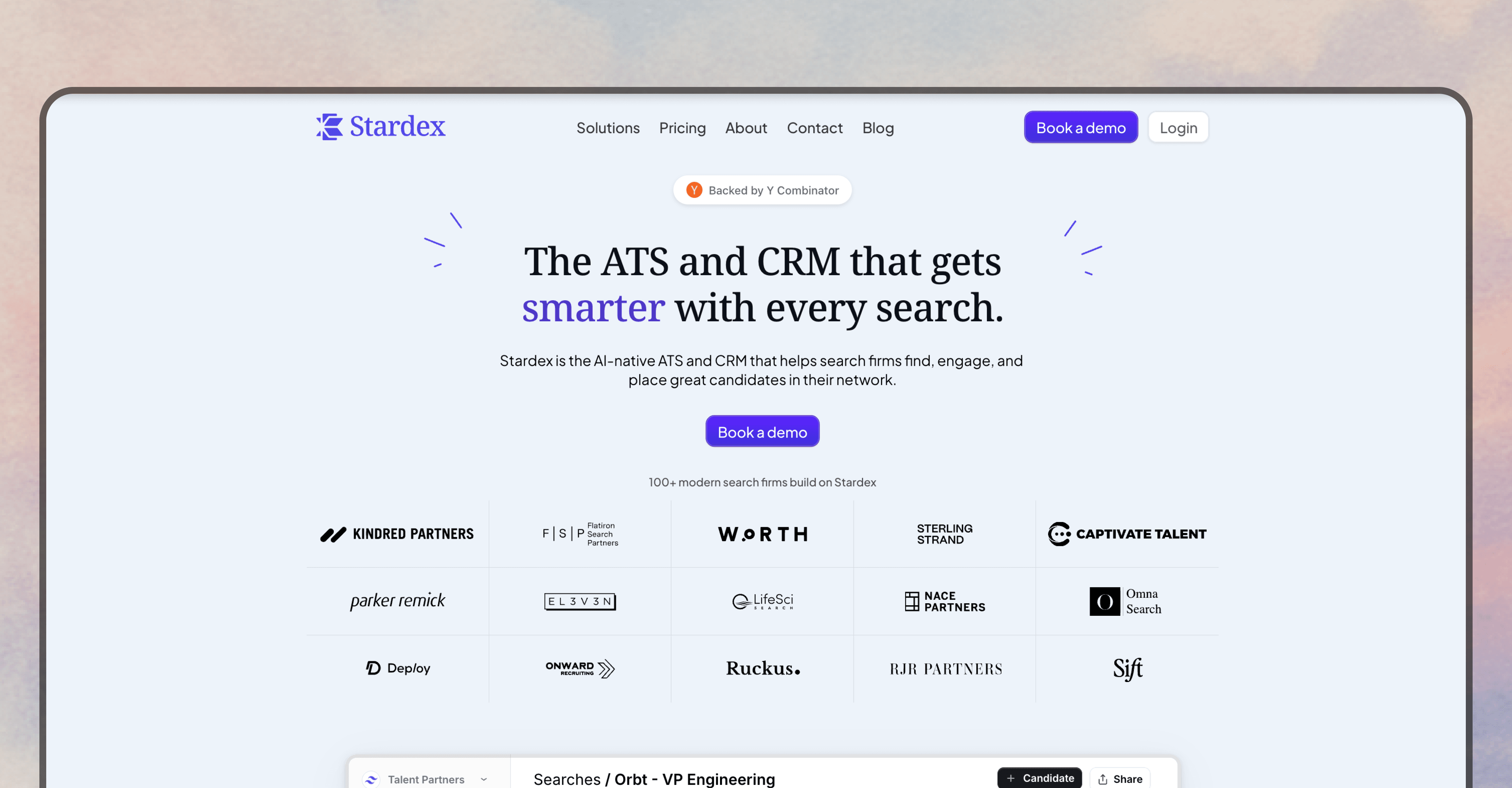
Stardex is an AI-native ATS and CRM built specifically for executive search and retained recruiting firms. Unlike legacy platforms that add AI as a separate feature, Stardex was designed around AI semantic search and automation from the beginning. This enables recruiters to search across candidate profiles, resumes, notes, emails, and transcripts using natural-language queries instead of relying on exact keywords.
Its biggest advantage is its ability to make an executive search firm’s existing database genuinely useful. For example, recruiters can search for a candidate they interviewed several years ago based on details mentioned in their notes—even if those details were never added as tags or structured fields. Stardex can also match candidates to active searches, enrich contact information, merge duplicate records, and import profiles through its Chrome extension.
Stardex combines candidate tracking with a built-in CRM, outreach tools, client portals, and real-time reporting. Teams can manage business development pipelines, monitor client relationships, send outreach sequences, and create customizable dashboards without relying on several separate platforms. It also supports confidential searches, retained-fee tracking, email synchronization, and detailed relationship histories—capabilities that are particularly important when recruiting senior executives.
Thrive
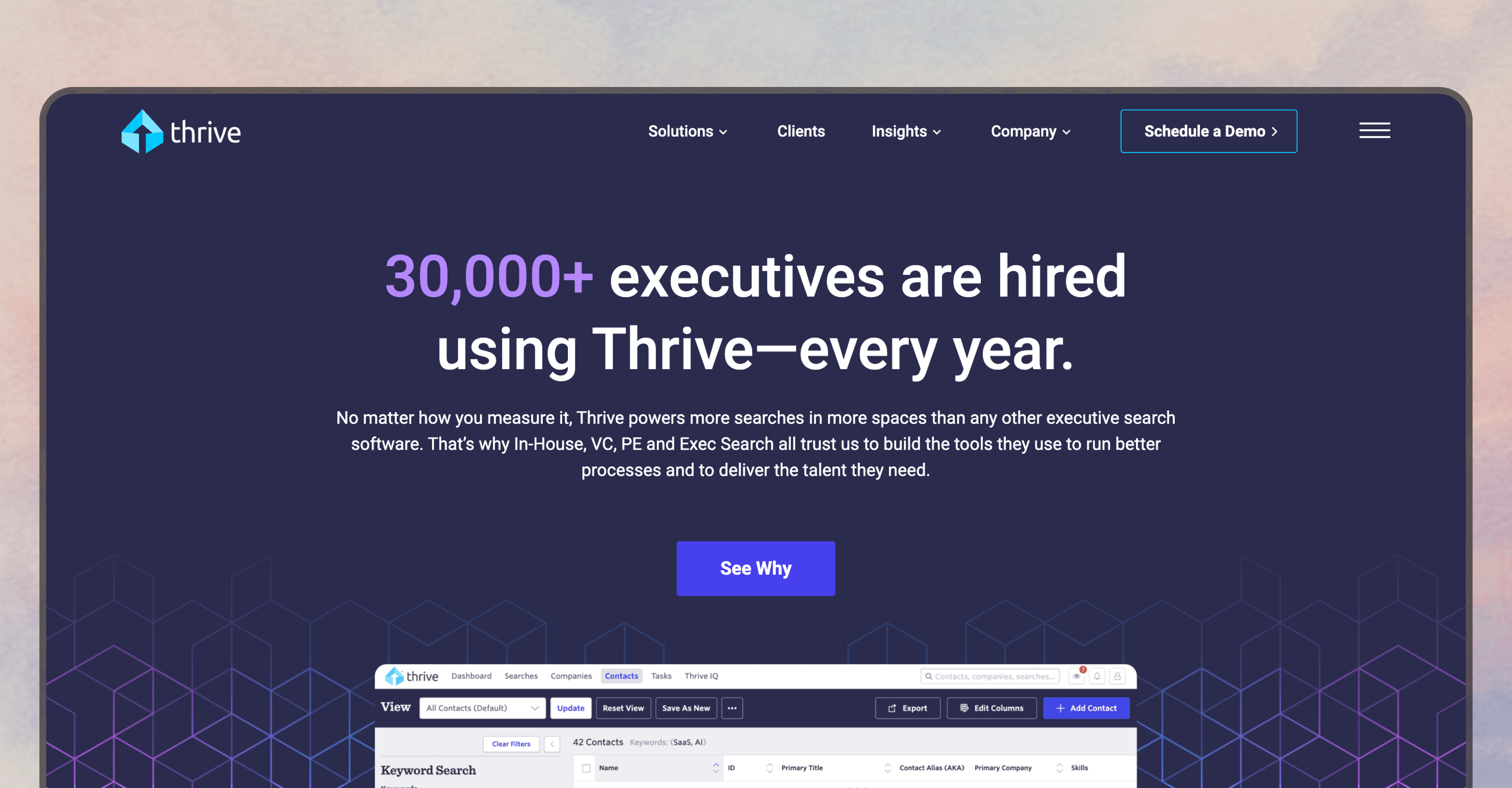
Thrive was created by the global executive search firm True. So, like Encore, it's also purpose-built to help firms secure the top talent that organizations need. It positions itself not just as ATS/CRM, but as a TRM (Talent Relationship Management) system built for executive search. That means it's conscious of factors such as candidate lifetime value, network reuse, and, therefore, fee potential.
One of its biggest strengths is its deep fee-tracking capability, which enables firms to closely monitor revenue from placements, particularly in retained search or senior leadership hiring, where the fee structure is complex and nuanced.
However, it shares a few common downsides with other tools: it takes time to load, and searching across internal notes can be frustrating. Some users also note that while it excels at managing relationships, it lacks strong CRM functionality, leading many teams to pair it with a separate CRM tool. If you want to minimize app switching, Thrive may not be the best choice for you.
Clockwork

Clockwork is known for being easy to use, but it's also one of the more static systems out there. It lacks automated or customizable reporting, which means teams often spend hours each week manually exporting data to build reports. They have recently started adding some more bolted on AI features.
There are also several issues with data formatting and consistency. Additionally, the client portal requires users to log in, which can hinder collaboration and productivity. Similar to Thrive, searching through notes is not very seamless. Clockwork's CRM features are limited, and its resume parsing tool has been reported to be inaccurate. And some of the pre-formulated status options are confusing and don't make sense.
Another user in the management consulting business shared that Clockwork lacks automation features essential for tracking candidates and keeping records of call frequency.
"There aren't more features to expedite certain processes. For example, a "log a call button" that logs a call automatically."
If smart automation features are non-negotiable for you, Clockwork may not be the best ATS for you.
Bullhorn Invenias
Invenias is the executive search solution offered by Bullhorn, one of the oldest and most established names in recruitment software. This is both its biggest strength and its weakness. Because it has been around for so long, the user experience feels "outdated" and isn't clunky compared to modern tools.
You often have to pay extra for add-ons to unlock features that competitors now include by default. And yes, the same issue shows up again: it's hard to search across internal notes. On the CRM side, Invenias doesn't offer much power or integration either, so many teams rely on external CRMs to fill the gap.
Recent user feedback has revealed that there is friction at every stage of the hiring process.
"Adding people takes so many steps that our people gave up. They would skip verification and create massive duplicates. We had to find a tit's party and pay them to do what Invenias's competitors don't in their product."
Indeed, expensive add-ons for features like custom reports and advanced analytics make it less practical. In fact, the same user also pointed out that Invenias' reporting feature is underperforming, which is also the same concern shared by Bullhorn users who have noted that Bullhorn isn't ideal for reporting unless Bullhorn Analytics is packaged in. So if you want seamless reporting with no additional cost, then Bullhorn Invenias is not for you
If you're ready to move on from Bullhorn, here's how you can migrate your data from Bullhorn to Stardex AI.
Ezekia
Ezekia stands out for having good auto-tagging features, which help you organize candidate data. However, users often point out that the UX and reporting features feel weak.
Users also point to disconnected workflows, requiring them to toggle between tools for calls, meetings, and reporting, which results in additional manual effort to keep everyhing in sync.
Ezekia reportedly requires recruiters to log notes manually, update statuses, and piece together information from different channels, which slows down candidate delivery and client engagement.
Just like Invenias, Ezekia's static reports or basic dashboards are no longer meeting the level of detail and customization that many clients demand.
Ezekia is a simple tool that gets your recruitment tasks done, but it lacks the polish and features that growing executive search firms might want as they scale.
Encore
Encore by Cleun has a solid concept behind it: a well-designed "workbench" that enables executive search firms to build and manage candidate lists easily. While it's especially popular among firms in the finance sector, Encore is also used by a diverse range of clients worldwide, including executive search consultants, government agencies, and universities.
The technology behind Encore was developed by an internal team with extensive shared experience in the executive search field. However, while it's reliable and niche-focused, it's not the most flexible or fastest option available out there.
Many users mention that it takes a while to load, and you can't search across internal notes, which can make finding past information a bit tedious. There's als no Chrome extension, and doesn't integrate well with note-taking tools like Otter unless you use third-party connectors like Zapier.
As one user from the staffing and recruiting industry shared:
"This product is quite behind its competitors, and it feels like an old 'DOS' computer as compared to other similar products. It is also extremely slow and lacking many desirable features." - Jill M.
If you want to prioritize speed and flexibility, Encore may not be the best choice for you.
Why Choose an AI-Native ATS for Executive Search
One thing that almost all these tools share, even the big ones like Bullhorn, Invenias, and Thrive, is that their CRM capabilities are limited and very static, with AI being almost an afterthought. Stardex is an ATS + CRM platform, built on top of a fully searchable vector database and designed with AI in mind.
Overall, unsearchable notes and poor reporting features are common issues across these ATS platform. So, if you've reached the limits of your current ATS, it's time to switch to an AI-native platform for a more intuitive and efficient executive search experience.
What Changes After Switching to Stardex
Fully Searchable Notes through AI Semantic Search
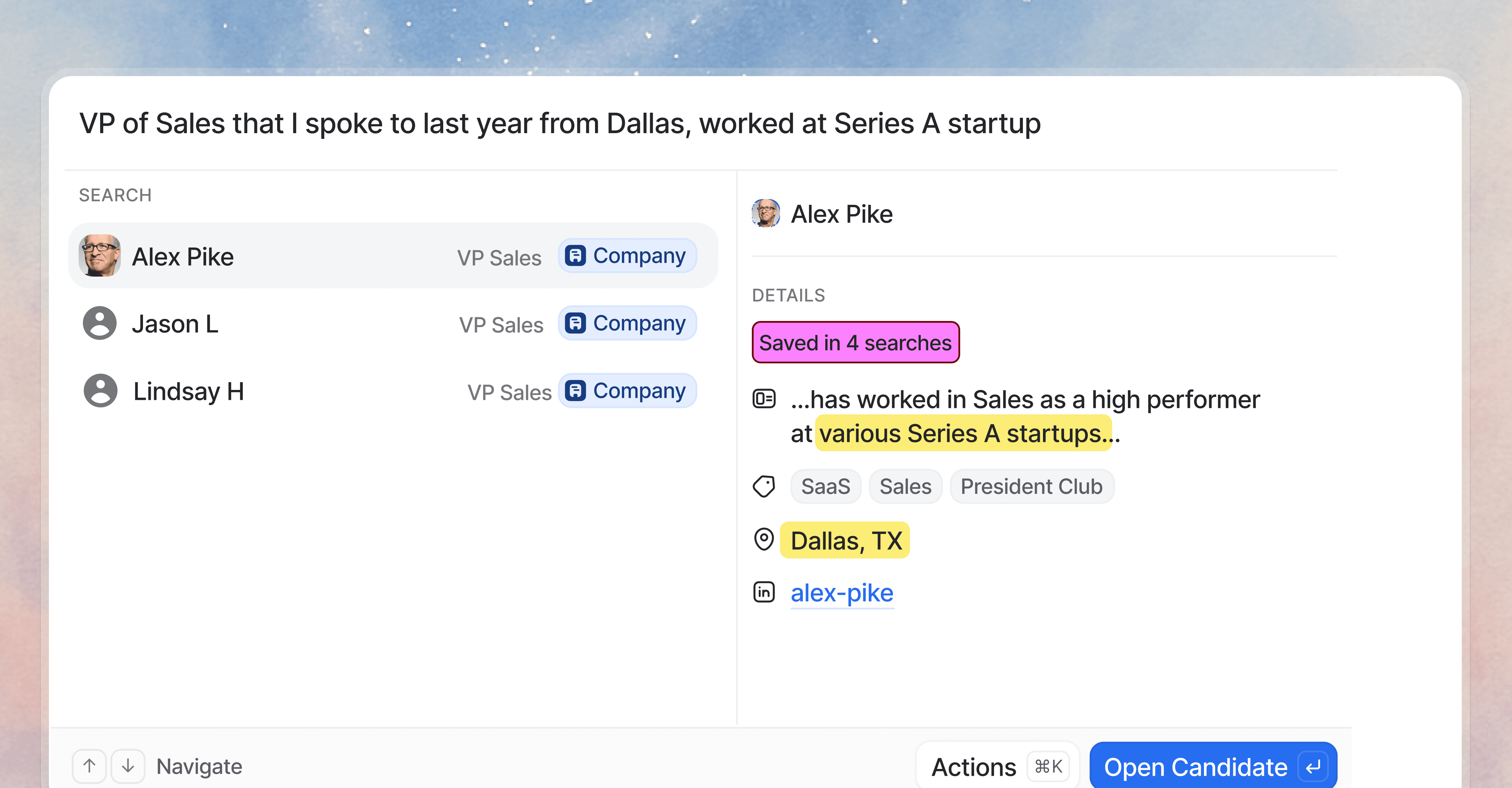
A common issue with Encore, Thrive, and Clockwork is that you can't search across your notes, making it hard to find past candidate insights. It's not because these ATS platforms are not good, but a significant factor in why users face such issues is that these tools are not AI-native. With Stardex AI, we use deep semantic AI search, allowing you to search through all your internal notes without relying on exact keywords.
Smarter Reporting Features
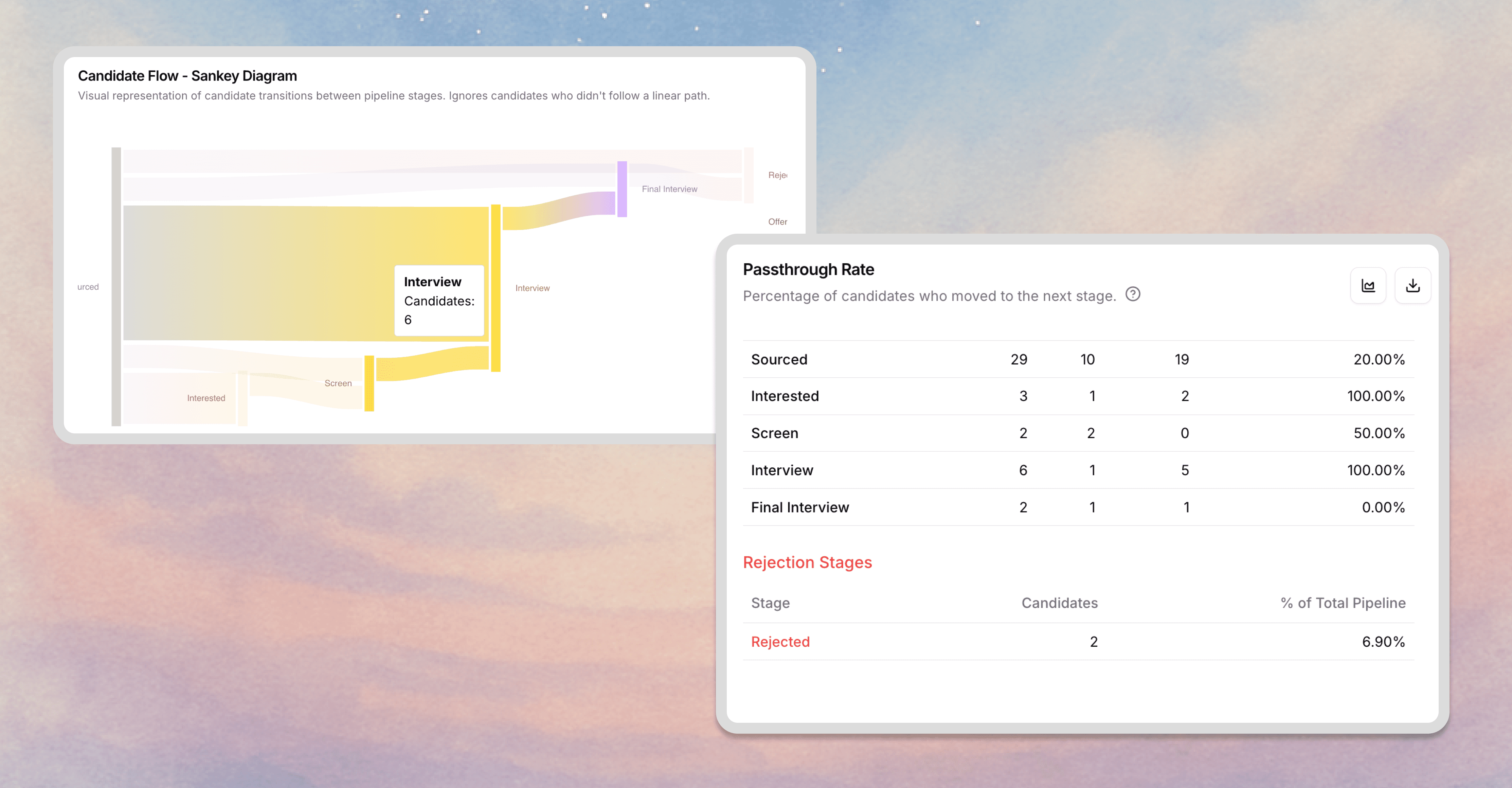
ATS platforms like Clockwork, Invenias, and Ezekia all struggle with poor reporting and automation features too. As a result, some executive search teams still rely on separate CRMs to manage client relationships. Meanwhile, Stardex offers a built-in CRM, providing in-depth insights with real-time analytics, customizable dashboards, and automated reporting, all at no additional cost. This allows you and your clients to monitor the performance of your searches and placements.
TL;DR
Picking the best ATS for executive search in 2026 isn’t easy. Many legacy platforms lack integrated CRM capabilities, powerful automation, or fully searchable notes—especially compared with AI-native platforms like Stardex.
Stardex: An AI-native ATS and CRM that makes candidate records and notes easily searchable while automating time-consuming recruitment workflows. It’s a strong choice for executive search firms that want modern, AI-powered candidate management.
Encore: Offers a solid workbench for creating and managing candidate lists. However, it can be slow and cannot search across notes effectively.
Thrive: Built by executive search firm True, with strong fee tracking and revenue insights. However, it can be slow and offers limited CRM capabilities.
Clockwork: Simple and easy to use, but manual reporting, poor note search, and limited automation can frustrate growing teams.
Bullhorn Invenias: Established and reliable, but its outdated user experience, costly add-ons, and weak reporting make it less practical for modern search firms.
Ezekia: Its auto-tagging feature helps organize data, but the user experience, reporting tools, and rigid workflows may hinder teams.


