
How AI is eliminating bias in executive search: technology meets DEI
Finding the right candidate for a senior or specialized role is never simple. Recruiters often face unconscious biases and long-standing patterns that can narrow the talent pool without anyone realizing it.
AI recruitment software can help. By focusing on skills and experience rather than background or familiarity, it gives recruiters a clearer view of who truly fits the role. At the same time, it helps firms build a more diverse and inclusive leadership pipeline.
Explore ATS tools designed for executive search firms to improve hiring accuracy and reduce bias. Start with platforms that offer transparent, data-driven candidate recommendations for fair, effective recruitment.
Why does bias persist even when everyone means well?
Even experienced recruiters make choices influenced by habit or familiarity, consciously or unconsciously.
Many tend to value candidates from familiar schools, companies, or career backgrounds. This can cut out people with non‑traditional paths.
In manual screening or interviews, impressions, resumes, layout, or even names can sway judgment, even if unintentionally.
Such patterns build up over time: entire firms may end up leaning toward a narrow talent pool, limiting diversity of thought and background.
That’s why relying solely on human judgment doesn’t always ensure fairness, especially when the candidate pool is large or the search is for senior or specialized roles.
What modern recruiting AI tools bring to the table

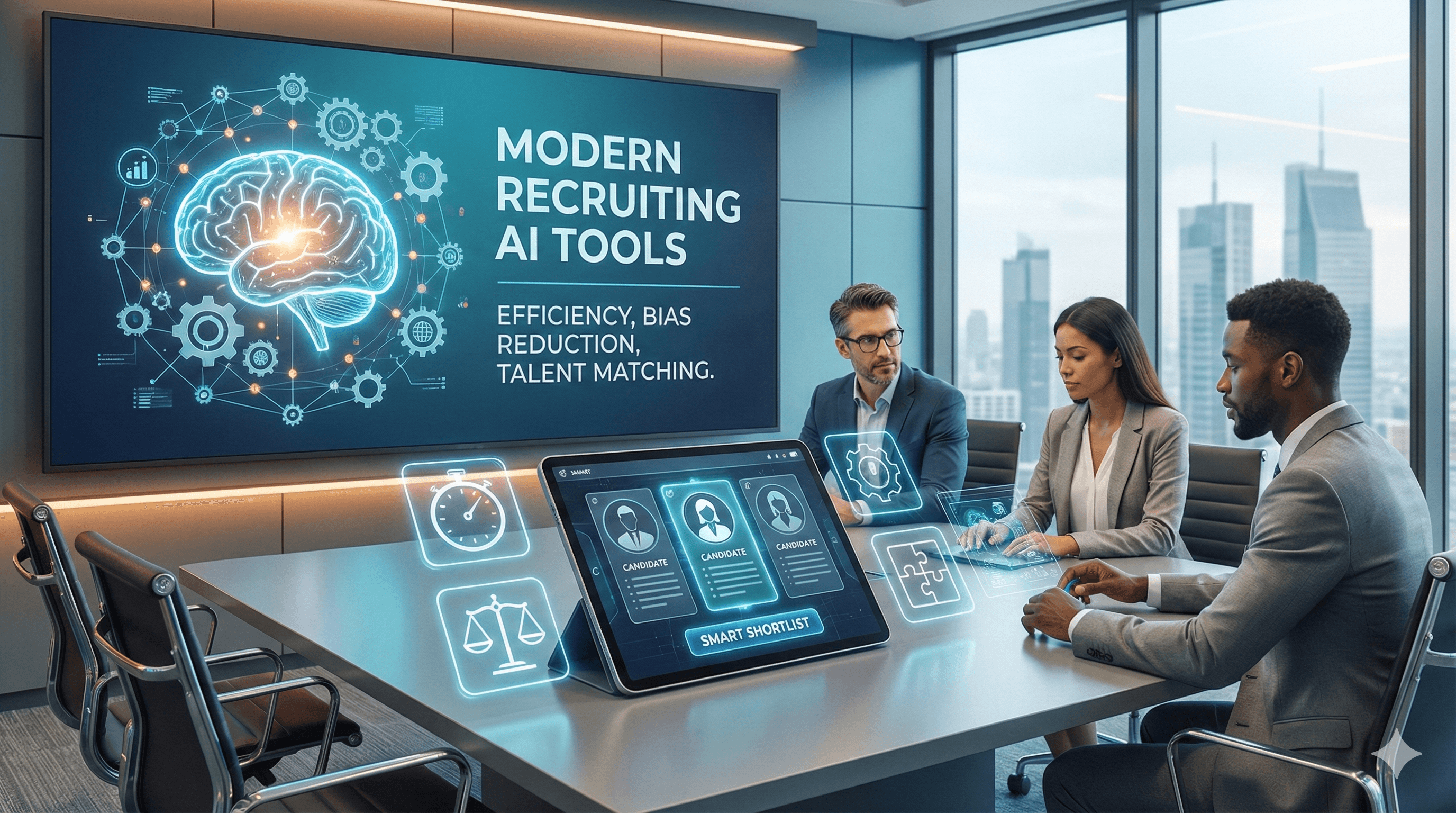
When used thoughtfully, recruiting tools powered by AI can help reduce bias in several ways.
Blind screening and anonymized evaluation: By stripping out identifiers like name, gender, or school, tools let recruiters focus on skills, experience, and suitability.
Consistent, objective matching and screening: Instead of relying on memory or gut feeling, tools apply the same criteria uniformly across all candidates. That helps avoid favoritism or similarity bias.
Broadening the talent pool beyond surface cues: Talents and skills may be described differently across resumes. With semantic matching and skills‑based screening, tools can surface candidates with unconventional backgrounds who might otherwise be overlooked.
Speed and scale, without human fatigue: When firms have to sift through hundreds or thousands of profiles, tools help scan quickly but fairly, reducing the chance of rushed or inconsistent evaluations.
If you're evaluating which capabilities matter most, this breakdown of the top features software hiring teams rely on can help add more clarity.
A quick view: where AI reduces bias and where humans still matter
Here is a simple comparison recruiters often find helpful:
Stage | How bias shows up | How AI helps | Where humans still matter |
Resume screening | Favoring familiar backgrounds; name bias | Anonymized profiles and skill-based filters | Interpreting career narratives |
First shortlist | Inconsistent scoring across candidates | Consistent criteria and ranking | Understanding cultural contribution |
Final interviews | Personal preference bias | Structured interview guides | Evaluating leadership presence |
To keep it natural, teams usually blend both. AI brings consistency. Recruiters bring context.
What studies tell us so far:
Industry research points to a clear pattern. Companies using AI sourcing and screening tools reported:
A 33% increase in diversity hiring when AI-supported early-stage decisions are made.
59% of HR managers believe AI reduces unconscious bias in ranking candidates.
AI delivers a 30-50% reduction in time-to-hire and cost-per-hire, directly lowering vacancy costs.
These findings show that the impact is strongest in the earliest parts of the funnel, where most bias is unintentional and happens quickly.
What do better DEI outcomes look like in executive search?
When AI recruitment tools are set up responsibly, the impact shows up in very specific parts of the hiring funnel. It becomes easier for firms to build leadership teams that reflect broader perspectives, stronger decision-making, and a healthier organizational culture.
1. Wider access to qualified talent
Search firms often depend on familiar networks or referrals when hiring for senior positions. This is one of the biggest limiting factors in leadership diversity. AI changes that. With semantic matching and skills-focused screening, recruiters see candidates they might not have found through personal networks alone.
Many firms using AI-based sourcing reported a noticeable rise in candidates from underrepresented groups showing up in their early shortlists.
2. Clearer evidence behind every shortlist
Traditional hiring often relies on instinct, especially when evaluating senior roles. AI adds transparency to those decisions. Recruiters see why a candidate is being recommended: their experience patterns, skill relevance, role alignment, and demonstrated strengths.
Executive Searches become more structured without losing the human perspective that senior hiring requires.
3. Better long-term leadership outcomes
Diverse leadership teams are linked to stronger performance and better problem-solving. According to multiple workforce studies, companies with more diverse senior teams outperform less diverse peers on innovation-related metrics and strategic decision-making.
AI helps firms make diversity an active part of leadership planning rather than something reviewed at the end of the year.
4. A more inclusive hiring experience for candidates
Candidates often talk about interviews feeling unpredictable or inconsistent. AI-supported workflows help offer a more level experience. Everyone is assessed on the same core criteria, every resume is reviewed fully, and every candidate gets a fairer shot at the shortlist.
This kind of consistency communicates trust and professionalism, especially for high-stakes roles.
How to prepare your firm to adopt bias-aware recruiting tools?
Before integrating any AI recruiting system, firms usually strengthen a few foundational elements internally.
1. Clear definitions of skills and success
AI performs best when job requirements are specific. Teams that define role expectations well see the strongest gains in fairness and accuracy.
2. Quality data inputs
If historical hiring records are inconsistent, outdated, or biased, tools can learn the wrong patterns. Many firms begin by cleaning their data or adjusting legacy scoring systems.
3. Role-specific evaluation frameworks
For senior roles, firms often create frameworks that combine AI-generated insights with human assessments. This helps both sides complement each other without overlap.
4. Regular calibration
Teams that periodically review recommendations, shortlist diversity, and interview outcomes maintain better consistency. This also ensures the tool continues to support DEI goals over time.
What this means for the future of executive search
The goal is not to automate judgment. The goal is to remove the blind spots that make leadership hiring uneven or unintentionally exclusive.
As AI tools evolve, search firms will be able to:
Discover talent from a wider set of industries and career paths.
Reduce repetitive steps that cause inconsistent screening.
Build leadership pipelines that reflect modern workplace expectations.
Support clients who prioritize fairness, transparency, and measurable DEI outcomes.
Executive hiring becomes more thoughtful and more evidence-based without losing the human insight recruiters rely on.
How Stardex supports fair, data-driven executive search
Bias often appears quietly in the early stages of hiring. Stardex helps firms reduce those gaps with tools built for accuracy, transparency, and scale. Its vector search system understands skills and experience in context rather than relying on surface-level keywords.
This brings forward strong candidates who might otherwise be overlooked, especially when their backgrounds differ from familiar patterns.
Recruiters can see why a match is being recommended, how the system evaluated the profile, and where the strongest alignment exists. This leads to more consistent shortlists and a smoother experience for both teams and candidates.
Stardex AI brings these capabilities together so your team can focus on the conversations, assessments, and insights that drive successful leadership hiring. If you're curious, a short demo can walk you through how it all comes together.
Fair warning: most teams end up saying, “Wait… it was this easy the whole time?”


